Back pain that travels into the buttock or leg, tingling in the feet, numbness or difficulty standing for long periods can sometimes be associated with a slipped disc. It is a common spinal condition that affects people across different age groups, although the likelihood and underlying causes can vary.
A slipped disc can interfere with everyday activities such as sitting, walking, bending, driving and sleeping. Some people experience mild discomfort, while others develop significant nerve-related symptoms that affect their mobility.
Despite the name, a slipped disc does not usually mean that a disc has physically moved out of the spine. It generally refers to a condition in which the soft inner material of an intervertebral disc pushes through a weakened or damaged outer layer. This may irritate or compress nearby nerves.
The good news is that many people with a slipped disc improve with appropriate non-surgical treatment. Surgery may be considered in selected cases, particularly when there is significant nerve compression or progressive neurological weakness.
This guide explains what a slipped disc is, why it happens, how to recognise its symptoms, how doctors diagnose it and what treatment options may be considered.
1. What Is a Slipped Disc?
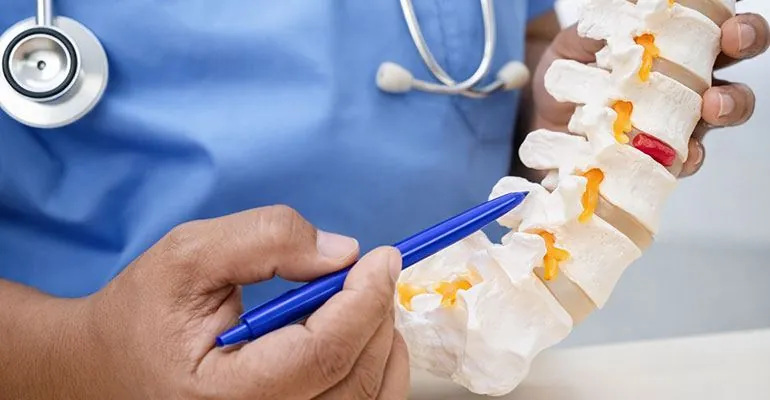
The human spine consists of a series of bones called vertebrae. Between these bones are intervertebral discs that act as cushions and help the spine absorb forces during everyday movements.
Each disc has two main components:
- Nucleus pulposus: The soft, gel-like centre of the disc.
- Annulus fibrosus: The strong outer layer that surrounds and contains the inner material.
A disc herniation occurs when part of the inner disc material pushes through a weakened area of the outer layer.
Depending on the location and extent of the herniation, the disc may press against nearby spinal nerves. This can produce pain, tingling, numbness or weakness.
The medical terms disc herniation, prolapsed disc and slipped disc are commonly used to describe related conditions.
A disc may also show bulging or degenerative changes without causing any symptoms. Therefore, an abnormal MRI report does not automatically mean that a person needs treatment or surgery.
2. Which Parts of the Spine Can Be Affected?
A slipped disc can occur in different regions of the spine. The symptoms depend on the location of the affected disc and the nerves involved.
A. Lumbar Disc Herniation
The lumbar spine is the lower part of the back. It carries much of the body's weight and is involved in bending, lifting and walking.
Lumbar disc herniation is commonly associated with lower back pain and pain radiating into one leg.
Symptoms may include:
- Lower back discomfort
- Pain travelling through the buttock and leg
- Tingling or numbness in the leg or foot
- Muscle weakness in certain movements
- Difficulty sitting or walking comfortably
When nerve irritation produces pain along the sciatic nerve pathway, the condition may be described as sciatica.
B. Cervical Disc Herniation
The cervical spine is located in the neck.
A cervical disc herniation may place pressure on nerves travelling into the shoulder, arm or hand.
Possible symptoms include:
- Neck pain or stiffness
- Pain spreading into the shoulder or arm
- Tingling in the fingers
- Numbness in the hand
- Weakness in the arm or hand
In some cases, significant compression of the spinal cord may affect balance, coordination and walking.
C. Thoracic Disc Herniation
The thoracic spine is the middle portion of the back, around the chest and rib cage.
Disc herniation in this region is less common than in the lumbar or cervical spine. Symptoms may include pain around the middle back or chest area, and occasionally neurological symptoms if the spinal cord is affected.
Unusual or persistent chest and back pain should not automatically be attributed to a spinal disc problem. Other medical causes may need to be ruled out.
3. Common Causes and Risk Factors of a Slipped Disc
Disc herniation can occur due to a combination of age-related changes, physical stress, injury and individual risk factors.
A. Age-Related Disc Degeneration
As people grow older, spinal discs gradually lose some of their water content and flexibility.
This may make the outer disc layer more vulnerable to damage and increase the likelihood of herniation.
B. Incorrect Lifting Techniques
Lifting heavy objects while bending and twisting suddenly can place considerable stress on the lower back.
Repeated lifting, particularly when combined with poor movement techniques, may contribute to back problems.
C. Prolonged Sitting and Inactivity
Long periods of sitting may aggravate existing back discomfort, particularly when combined with limited physical activity and poor movement habits.
People with desk-based jobs, long commuting routines or sedentary lifestyles may benefit from regular movement breaks and suitable strengthening exercises.
D. Sudden Injury or Trauma
A fall, road accident or sudden physical injury can sometimes contribute to disc damage.
Back or neck pain following a significant accident should be assessed by a medical professional, particularly when accompanied by numbness, weakness or difficulty walking.
E. Excess Body Weight
Excess body weight may increase mechanical demands on the spine and contribute to back discomfort.
Maintaining a healthy weight through appropriate nutrition and physical activity can support general musculoskeletal health.
F. Smoking and Tobacco Use
Smoking is associated with poorer spinal disc health and may contribute to degenerative changes.
Avoiding tobacco is an important part of maintaining overall health.
G. Genetic and Individual Factors
Some individuals may have a greater tendency towards disc degeneration or spinal problems due to inherited and other biological factors.
Not every person with these risk factors will develop a slipped disc, and the condition can occur even in people who appear otherwise healthy.
4. Symptoms of a Slipped Disc
The symptoms depend on the location of the disc herniation and whether nearby nerves are affected.
Some people experience only localised back or neck discomfort. Others develop pain, tingling, numbness or weakness along the pathway of an affected nerve.
Common Symptoms
Lower back pain: Pain may be felt around the waist or lower spine and may worsen during certain movements.
Radiating leg pain: Pain may travel from the lower back or buttock into the thigh, calf or foot.
Tingling and numbness: Nerve irritation may cause pins-and-needles sensations or reduced sensation in parts of the leg, foot, arm or hand.
Muscle weakness: Some people may notice difficulty lifting the foot, standing on their toes, gripping objects or performing certain movements.
Neck and arm pain: Cervical disc problems may cause pain that travels from the neck into the shoulder and arm.
Movement-related discomfort: Bending, coughing or sneezing may aggravate symptoms in some patients.
The presence of one or more symptoms does not confirm a slipped disc. A clinical assessment is necessary to identify the underlying cause.
Warning Signs That Require Urgent Medical Attention
Certain symptoms may indicate serious compression of spinal nerves or the spinal cord.
Seek emergency medical attention if back pain is accompanied by:
- New difficulty passing urine or loss of bladder control
- Loss of bowel control
- Numbness around the groin or inner thighs
- Rapidly worsening weakness in one or both legs
- New difficulty walking or maintaining balance
- Severe symptoms following a significant accident
These symptoms may indicate a serious neurological condition. Do not delay assessment while trying home remedies or exercises.
5. How Is a Slipped Disc Diagnosed?
An accurate diagnosis helps determine whether symptoms are related to a disc herniation, muscle strain, spinal stenosis or another condition.
An orthopaedic or spine specialist may use the following methods.
A. Medical History
The doctor may ask about:
- When the pain started
- Whether it began after an injury
- Where the pain is located
- Whether it travels into the arm or leg
- Whether numbness or weakness is present
- Which activities make symptoms worse
- Whether previous treatment has helped
This information helps identify the likely source of the problem.
B. Physical and Neurological Examination
The doctor may assess spinal movement, posture, muscle strength, sensation, reflexes and walking ability.
Specific clinical tests may help identify nerve irritation and determine which spinal region may be involved.
C. MRI Scan
MRI is commonly used when detailed assessment of spinal discs, nerves and surrounding soft tissues is needed.
It can help identify disc herniation, nerve compression and other spinal abnormalities.
However, MRI findings must be interpreted alongside the patient's symptoms and examination. Some people have disc bulges or herniations without experiencing pain.
D. X-Ray
An X-ray does not show the soft disc material in detail. However, it may help assess spinal alignment, bone structure, certain fractures and other changes.
E. CT Scan and Additional Tests
A CT scan may be useful when detailed assessment of bone structures is needed.
In selected cases, additional tests such as nerve conduction studies or electromyography may help investigate nerve function.
The doctor decides which investigations are appropriate based on the patient's symptoms and clinical findings.
6. Slip Disc Treatment: Can It Be Managed Without Surgery?
Many people with a slipped disc improve without an operation. Treatment usually begins with non-surgical approaches unless there is a serious neurological problem or another urgent indication for intervention.
The treatment plan depends on the severity of symptoms, the location of the disc herniation and the degree of nerve involvement.
A. Medication
A doctor may prescribe medication to help manage pain or inflammation.
The choice depends on the patient's medical history, other medicines and potential side effects.
Patients should avoid prolonged self-medication or taking prescription medicines without medical advice.
B. Activity Modification
Patients may be advised to temporarily reduce activities that aggravate symptoms, such as heavy lifting, repeated bending or strenuous exercise.
However, prolonged bed rest is generally not recommended for uncomplicated back pain.
The goal is to maintain suitable movement while protecting the affected area and avoiding activities that worsen symptoms.
C. Physiotherapy
Physiotherapy is an important part of non-surgical management for many patients.
A customised programme may include:
- Gentle mobility exercises
- Core muscle strengthening
- Posture and movement education
- Flexibility exercises
- Gradual strengthening of supporting muscles
- Walking and functional movement training
The programme should be based on the patient's diagnosis and physical capacity.
Exercises that help one person may aggravate symptoms in another. Patients should avoid copying online exercise routines without understanding whether they are appropriate for their condition.
D. Lifestyle Modifications
Long-term management may involve changes to daily habits.
Useful measures can include:
- Taking regular breaks from prolonged sitting
- Maintaining suitable physical activity
- Using safe lifting techniques
- Avoiding sudden twisting under load
- Maintaining a healthy body weight
- Avoiding tobacco use
These changes can support spinal health but should not be treated as a substitute for medical assessment.
E. Selected Pain Management Procedures
For some patients with persistent nerve-related pain, a specialist may consider selected image-guided injections or other interventions.
These procedures may help manage symptoms in appropriate cases, but they are not suitable for everyone and do not necessarily correct the underlying disc abnormality.
The expected benefits, limitations and possible risks should be discussed with the treating doctor.
7. When Is Surgery Required for a Slipped Disc?
Surgery is generally considered when symptoms and clinical findings indicate that non-surgical treatment is unlikely to provide sufficient relief or when neurological function is at risk.
A spine surgeon may recommend surgery in situations such as:
- Progressive muscle weakness due to nerve compression
- Severe and persistent nerve-related pain despite appropriate non-surgical treatment
- Significant compression of spinal nerves
- Spinal cord compression with neurological symptoms
- Certain cases of cauda equina syndrome, which require emergency assessment and treatment
The decision should not be based on MRI findings alone.
The surgeon considers the patient's symptoms, physical examination, imaging, general health and the expected benefits and risks of an operation.
Common Surgical Options
Microdiscectomy: A procedure in which the portion of disc material compressing a nerve is removed through a small surgical opening.
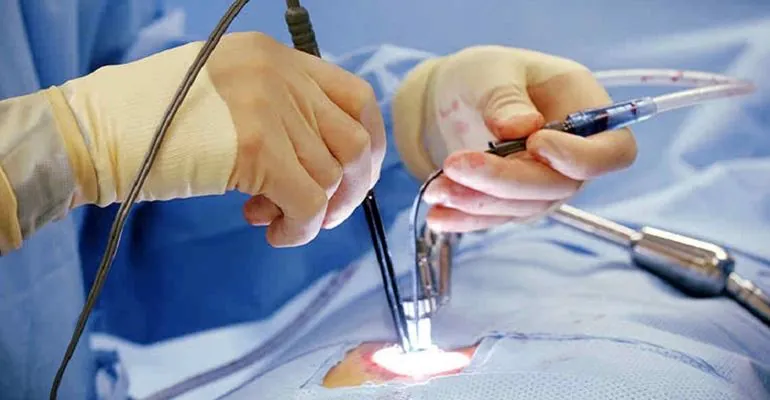
Endoscopic discectomy: A minimally invasive approach using an endoscope and specialised instruments to treat selected disc herniations.
Decompression surgery: A procedure that creates additional space for compressed nerves by removing selected structures.
Cervical spine surgery: Selected cervical disc conditions may require procedures to relieve nerve or spinal cord compression. The appropriate technique depends on the location and nature of the problem.
Not every patient is suitable for minimally invasive or endoscopic surgery. The most appropriate approach depends on the diagnosis, anatomy and surgeon's assessment.
8. What Is Endoscopic Spine Surgery?
Endoscopic spine surgery is a minimally invasive surgical approach that uses a small camera, called an endoscope, and specialised instruments.
The surgeon accesses the affected area through a small incision and views the surgical field on a monitor.
For selected patients, potential advantages may include:
- Smaller surgical access
- Less disruption to some surrounding tissues
- Reduced wound size
- Potentially shorter hospital stays in appropriate cases
- Earlier mobilisation in selected patients
However, these benefits are not guaranteed for every patient.
Endoscopic techniques are not suitable for all disc herniations or spinal conditions. Complex anatomy, the location of compression and other clinical factors may make a different procedure more appropriate.
The decision should be made after a detailed consultation with an experienced spine surgeon.
9. Recovery After Slipped Disc Treatment
Recovery varies according to the underlying condition, treatment method and individual health.
Recovery Without Surgery
Patients receiving non-surgical treatment may gradually improve over several weeks, although some cases take longer.
A structured rehabilitation programme may help restore movement, strength and confidence.
Recovery After Surgery
Recovery following spine surgery depends on the procedure performed and the patient's condition.
The treating surgeon provides instructions regarding:
- Walking and movement
- Wound care
- Medication
- Driving and travel
- Return to work
- Physiotherapy
- Restrictions on lifting and strenuous activity
Patients should not resume heavy exercise or physical work simply because pain has reduced.
Follow-up appointments help the treating team assess recovery and identify any complications.
10. How Can You Reduce the Risk of Recurring Back Problems?
A slipped disc cannot always be prevented. However, certain habits may support spinal health and reduce avoidable physical strain.
Stay physically active: Regular, suitable activity helps maintain strength and general fitness.
Strengthen core muscles: Exercises prescribed by a physiotherapist may improve muscle support and movement control.
Avoid prolonged sitting: Take short movement breaks during desk work and long journeys.
Lift carefully: Keep objects close to the body and avoid sudden twisting while lifting.
Maintain a healthy weight: Appropriate nutrition and physical activity can help manage excess mechanical stress.
Avoid tobacco: Smoking is associated with poorer disc health and other health risks.
Seek early assessment: Recurring back pain, leg pain, numbness or weakness should be evaluated rather than repeatedly managed with painkillers alone.
11. Slip Disc Treatment in Panvel and Nearby Areas
People experiencing persistent back pain, radiating leg pain or symptoms of nerve compression may benefit from an assessment by an orthopaedic or spine specialist.
Residents of Panvel, New Panvel, Khandeshwar, Kamothe, Kalamboli and Karanjade may seek consultation locally when back pain begins affecting their daily routine.
Patients from Kharghar, Taloja, Ulwe, Uran, Rasayani, Khalapur and Pen may also consider orthopaedic evaluation in Panvel, depending on their location and treatment needs.
Mhatre Accident Hospital, Panvel, provides a point of contact for patients seeking assessment of orthopaedic and accident-related conditions.
The appropriate care pathway depends on the clinical findings. It may involve specialist consultation, diagnostic investigations, medication, physiotherapy or surgical assessment when indicated.
Patients should contact the hospital directly to confirm the availability of the relevant spine specialist, diagnostic services and treatment facilities.
If symptoms include new bladder or bowel dysfunction, numbness around the groin or rapidly progressing weakness, seek emergency medical care immediately rather than waiting for a routine appointment.
12. Frequently Asked Questions About Slipped Disc
1. Is a slipped disc a serious condition?
It can range from a mild condition that improves with non-surgical treatment to a problem involving significant nerve compression. Severity depends on the symptoms, examination findings and underlying cause.
2. Can a slipped disc heal without surgery?
Yes. Many patients improve with appropriate activity modification, medication when required and physiotherapy. Surgery is considered in selected cases.
3. Does a slipped disc always cause back pain?
No. Some people have disc herniations without symptoms. Others may experience pain mainly in the leg or arm because of nerve irritation.
4. Can walking help with a slipped disc?
Gentle walking may help some patients maintain mobility, depending on their symptoms and diagnosis. The appropriate activity level should be discussed with the treating doctor.
5. Is an MRI necessary to diagnose a slipped disc?
MRI is useful when detailed assessment of the discs and nerves is required. However, it is not necessary for every episode of back pain. The doctor determines whether imaging will influence treatment decisions.
6. How long does recovery from a slipped disc take?
Recovery varies. Some patients improve over several weeks, while others need a longer treatment and rehabilitation programme. Recovery after surgery depends on the procedure and individual circumstances.
7. Can a slipped disc happen at a young age?
Yes. Although age-related degeneration is a risk factor, disc herniation can occur in younger adults due to injury, physical stress or other individual factors.
8. Is endoscopic spine surgery better than conventional surgery?
Not in every case. Endoscopic surgery may be suitable for selected conditions, but the most appropriate procedure depends on the anatomy, location of compression and clinical requirements.
9. Can a slipped disc cause leg weakness?
Yes. If a herniated disc compresses a nerve, it may cause weakness in certain muscles. Progressive weakness requires prompt medical assessment.
Conclusion
A slipped disc can cause back pain, radiating leg or arm pain, tingling, numbness and muscle weakness. Its impact varies from mild discomfort to significant limitations in everyday movement.
An accurate diagnosis is important because not every disc abnormality causes symptoms, and not every patient requires surgery.
Many people improve with appropriate non-surgical treatment, while selected patients may benefit from spine surgery or minimally invasive procedures.
For individuals seeking slip disc treatment in Panvel and nearby areas, timely assessment by an appropriate orthopaedic or spine specialist can help identify the cause of symptoms and determine a suitable treatment plan.
Mhatre Accident Hospital, Panvel
Helpline Numbers: 022-27451066 | +91 81691 14910 | +91 99303 10614
—------------------------