Persistent back pain, shooting leg pain, numbness and difficulty walking can sometimes be associated with conditions affecting the spinal discs and nerves. For some patients, medication, physiotherapy and other non-surgical treatments provide sufficient relief. However, when symptoms persist or significant nerve compression affects daily function, surgical treatment may be considered.
Advances in spine surgery have introduced minimally invasive techniques that allow surgeons to access selected spinal structures through relatively small incisions. One such approach is endoscopic spine surgery.
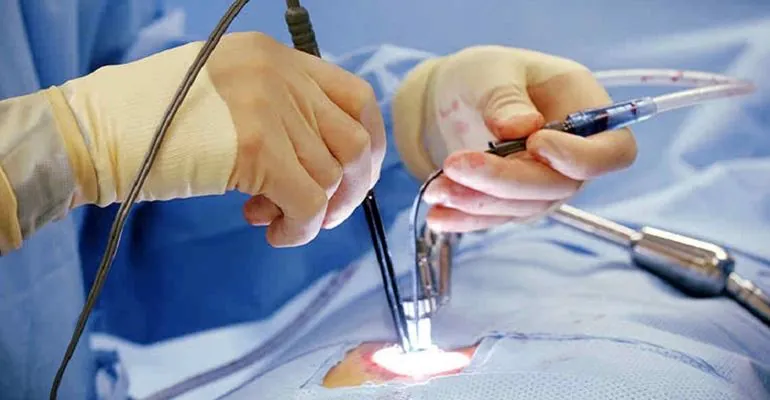
Using a specialised camera and fine surgical instruments, a spine surgeon can access selected areas of the spine and treat certain conditions while limiting disruption to surrounding tissues.
However, endoscopic spine surgery is not suitable for every spinal problem. The choice of procedure depends on the diagnosis, location of nerve compression, spinal anatomy, severity of symptoms and the patient's overall health.
For people exploring endoscopic spine surgery in Panvel and nearby areas of Navi Mumbai, understanding the procedure, its potential benefits and limitations is important before making a treatment decision.
This guide explains how endoscopic spine surgery works, which conditions it may treat, who may be suitable, what recovery involves and when conventional spine surgery may be more appropriate.
1. What Is Endoscopic Spine Surgery?
Endoscopic spine surgery is a minimally invasive surgical approach that uses an endoscope, a narrow instrument containing a camera and light source, to access selected areas of the spine.
The camera displays magnified images of the surgical area on a monitor. The surgeon uses specialised instruments to perform the required treatment under direct visual guidance.
Depending on the condition, endoscopic techniques may be used to remove disc material compressing a nerve or create additional space around affected neural structures.
The procedure is generally performed through a small skin incision, with access planned according to the location of the spinal problem.
The main objective is to address the specific source of nerve compression while minimising unnecessary disruption to surrounding tissues.
It is important to understand that minimally invasive does not mean risk-free. Endoscopic surgery is still a specialised spinal operation that requires careful patient selection and surgical expertise.
2. Understanding the Spine and Nerve Compression
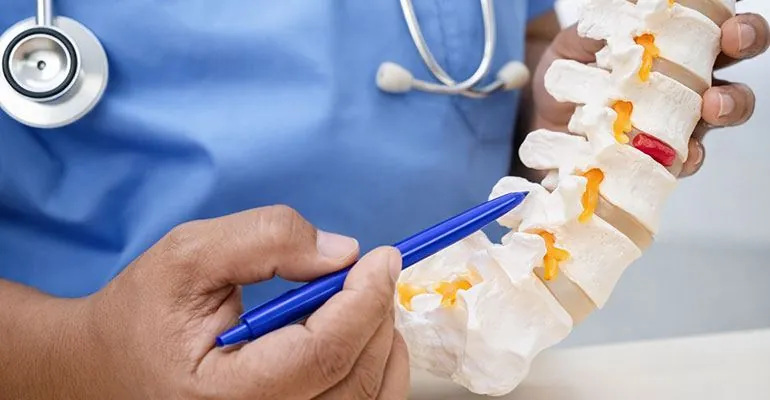
The spine consists of a series of bones called vertebrae. Between these bones are intervertebral discs that help absorb forces and support movement.
The spinal canal contains the spinal cord and, in the lower back, the nerve roots that continue through the lumbar region.
Nerves exit the spinal canal through openings between the vertebrae and carry signals between the brain, spinal cord and different parts of the body.
Several conditions can reduce the space available for these nerves.
A. Herniated Disc
A herniated disc occurs when inner disc material pushes through a weakened area of the outer disc layer.
If the displaced material presses against a nearby nerve, it may cause pain, tingling, numbness or weakness.
B. Spinal Stenosis
Spinal stenosis refers to narrowing of the spinal canal or nerve exit pathways.
It may result from a combination of disc degeneration, thickened ligaments, enlarged joints and other structural changes.
Symptoms depend on the location and severity of the narrowing.
C. Foraminal Narrowing
The neural foramina are openings through which spinal nerves exit.
When these openings become narrower, nerve irritation or compression may occur.
This can cause pain or other neurological symptoms along the affected nerve pathway.
D. Degenerative Spinal Changes
Age-related changes in the discs and joints may contribute to back pain, stiffness and nerve compression in some individuals.
Not every degenerative change causes symptoms. Imaging findings must always be interpreted alongside clinical examination.
3. Which Conditions Can Be Treated With Endoscopic Spine Surgery?
Endoscopic techniques may be suitable for selected spinal conditions, particularly those involving localised nerve compression.
A. Lumbar Disc Herniation
Lumbar disc herniation is one of the conditions for which endoscopic procedures may be considered.
When disc material compresses a nerve in the lower back, patients may experience:
- Lower back pain
- Pain radiating into the buttock or leg
- Tingling or numbness
- Weakness in certain muscles
- Difficulty sitting, standing or walking comfortably
If symptoms remain significant despite appropriate non-surgical treatment, a spine surgeon may consider a procedure to remove the disc material compressing the nerve.
B. Sciatica
Sciatica describes pain that travels along the sciatic nerve pathway, commonly from the lower back or buttock into the leg.
It is a symptom pattern rather than a diagnosis.
A herniated disc or other causes of nerve compression may produce sciatica.
Endoscopic surgery may be considered when a clearly identified structural problem is responsible for persistent symptoms and surgical treatment is appropriate.
C. Selected Cases of Lumbar Spinal Stenosis
In certain patients with lumbar spinal stenosis, endoscopic decompression may be an option.
The objective is to create more space around the affected nerves by removing selected structures responsible for compression.
The suitability of endoscopic decompression depends on the location and extent of narrowing, spinal stability and other anatomical factors.
D. Foraminal Stenosis
When the openings through which spinal nerves exit become narrowed, the affected nerve may become compressed.
Selected cases of foraminal stenosis may be considered for minimally invasive decompression, including endoscopic techniques.
The surgeon must carefully assess the anatomy and determine whether sufficient decompression can be achieved safely.
E. Other Selected Spinal Conditions
Endoscopic approaches are also being used for certain additional spinal conditions, depending on the surgeon's expertise, available technology and the patient's anatomy.
However, complex spinal deformities, extensive instability, certain fractures and conditions requiring major reconstruction may need other surgical approaches.
4. Symptoms That May Indicate a Spinal Nerve Problem
Symptoms vary according to the spinal region and the nerves involved.
Common symptoms include:
- Persistent lower back pain
- Pain travelling into one or both legs
- Tingling or numbness in the feet
- Burning or shooting sensations
- Muscle weakness
- Difficulty walking for extended periods
- Reduced balance or coordination
- Pain that increases during certain movements
Warning Signs Requiring Emergency Attention
Some symptoms may indicate serious compression of spinal nerves or the spinal cord.
Seek emergency medical attention if there is:
- New difficulty passing urine
- Loss of bladder or bowel control
- Numbness around the groin or inner thighs
- Rapidly worsening weakness in one or both legs
- New difficulty walking or maintaining balance
- Severe spinal pain following a major accident
These symptoms should not be managed by waiting for a routine consultation.
5. How Is a Patient Evaluated Before Endoscopic Spine Surgery?
A detailed evaluation is essential before recommending any spinal procedure.
Endoscopic surgery should be considered only when the patient's symptoms, examination findings and imaging identify a suitable problem that can reasonably be treated through this approach.
A. Medical History
The spine specialist may ask:
- When did the pain begin?
- Does it travel into the leg or arm?
- Is there numbness or weakness?
- Does walking or standing aggravate symptoms?
- Has the patient experienced bladder or bowel changes?
- What non-surgical treatments have already been attempted?
- Are there other medical conditions?
This information helps establish the likely cause and severity of the problem.
B. Neurological Examination
The doctor may assess muscle strength, sensation, reflexes, walking ability and other neurological functions.
The examination helps identify which nerves may be affected.
C. MRI Scan
MRI provides detailed images of spinal discs, nerves and surrounding soft tissues.
It can help identify:
- Disc herniation
- Nerve compression
- Spinal canal narrowing
- Foraminal stenosis
- Other soft-tissue abnormalities
MRI findings must match the patient's symptoms and examination before they are used to plan surgery.
D. X-Ray and CT Scan
X-rays may help assess spinal alignment, bone structure and certain degenerative changes.
A CT scan may provide additional detail about bone anatomy, particularly when the surgeon needs to assess complex structural changes.
E. Assessment of Surgical Suitability
The surgeon considers:
- Exact location of nerve compression
- Severity of symptoms
- Spinal stability
- Previous spinal surgery
- Bone and disc condition
- Overall medical fitness
- Expected benefits and potential risks
If non-surgical treatment remains appropriate, surgery may be deferred.
6. How Is Endoscopic Spine Surgery Performed?
The exact technique depends on the spinal condition, the location of compression and the type of endoscopic approach selected.
A general procedure may involve the following steps.
Step 1: Preoperative Assessment
The patient undergoes medical evaluation and imaging review.
The surgeon explains the planned procedure, alternatives, possible risks and expected recovery.
Step 2: Anaesthesia and Positioning
The patient receives an appropriate anaesthetic plan.
Positioning depends on the spinal level and the surgical technique.
Step 3: Small Surgical Access
A small incision is made at the planned access point.
A specialised access instrument is introduced towards the affected spinal region under appropriate imaging guidance.
Step 4: Endoscope Insertion
The endoscope is positioned to provide a magnified view of the surgical area.
The surgeon uses the monitor to identify the relevant structures.
Step 5: Targeted Treatment
Depending on the diagnosis, the surgeon may remove the portion of disc material or selected tissue responsible for nerve compression.
The objective is to relieve pressure on the affected nerve while preserving surrounding structures as far as possible.
Step 6: Completion of the Procedure
The surgeon checks the treated area, removes the instruments and closes the small incision.
The patient is then monitored during the postoperative period.
The actual steps and duration vary according to the procedure and individual anatomy.
7. What Are the Different Endoscopic Spine Surgery Approaches?
Endoscopic spine surgery includes different techniques. The surgeon selects the approach according to the location of the spinal problem.
A. Transforaminal Endoscopic Approach
The transforaminal approach accesses the spinal region through the foramen, the opening through which the nerve exits.
It may be considered for selected lumbar disc herniations and other suitable conditions.
B. Interlaminar Endoscopic Approach
The interlaminar approach uses the space between adjacent vertebral structures to access the spinal canal.
It may be suitable for certain lower lumbar disc herniations and selected cases of nerve compression.
C. Endoscopic Decompression
Endoscopic decompression involves removing selected tissue that is compressing a nerve.
Depending on the condition, this may involve treating bone or soft-tissue structures contributing to narrowing.
Not every spinal condition can be treated through the same endoscopic approach. The surgeon's assessment determines the most appropriate technique.
8. Potential Benefits of Endoscopic Spine Surgery
For appropriately selected patients, endoscopic surgery may offer several potential advantages.
Smaller Surgical Incision
The procedure generally uses a small incision compared with many traditional open approaches.
Reduced Muscle Disruption
Selected endoscopic techniques can minimise disruption to surrounding muscle and soft tissues.
Direct Visualisation
The endoscope provides magnified images that allow the surgeon to view the targeted surgical area.
Potentially Earlier Mobilisation
Some patients may be able to begin walking relatively early after suitable procedures.
Potentially Shorter Hospital Stay
Selected procedures may allow discharge on the same day or after a shorter hospital stay, depending on the patient's condition and recovery.
Targeted Treatment
The technique allows the surgeon to focus on the specific area responsible for nerve compression.
These are potential advantages, not guaranteed outcomes. Recovery and results depend on the diagnosis, surgical technique, patient health and rehabilitation.
9. Endoscopic Spine Surgery vs Conventional Spine Surgery
| Feature | Endoscopic Spine Surgery | Conventional Spine Surgery |
|---|---|---|
| Surgical access | Small access incision | May involve a larger incision, depending on procedure |
| Visualisation | Camera-based magnified view | Direct surgical view, sometimes with magnification |
| Tissue disruption | May involve less muscle disruption in selected procedures | Varies according to surgical approach |
| Suitable conditions | Selected disc and nerve-compression problems | Broad range of spinal conditions |
| Surgical planning | Depends on anatomy and endoscopic access | Depends on anatomy and procedure requirements |
| Recovery | Varies by procedure and patient | Varies by procedure and patient |
Both endoscopic and conventional techniques aim to treat spinal conditions and relieve nerve compression when surgery is necessary.
However, the surgical access and methods used can differ.
Endoscopic surgery is not automatically superior to conventional surgery.
Some conditions require wider exposure, spinal stabilisation, fusion or more extensive reconstruction. In such cases, conventional or other minimally invasive techniques may be more appropriate.
The objective is to choose the procedure that safely addresses the underlying problem, not simply the procedure with the smallest incision.
10. What Are the Risks of Endoscopic Spine Surgery?
Endoscopic spine surgery is still a spinal operation and carries potential risks.
These may include:
- Infection
- Bleeding
- Nerve irritation or injury
- Dural tear and cerebrospinal fluid leakage
- Persistent or recurring symptoms
- Incomplete relief of nerve compression
- Recurrent disc herniation
- Need for further surgery
- Anaesthesia-related complications
Some patients may experience temporary tingling, numbness or discomfort after surgery.
The risks depend on the patient's condition, the spinal level involved and the procedure performed.
The surgeon should explain the risks and alternatives before obtaining informed consent.
11. Recovery After Endoscopic Spine Surgery
Recovery varies depending on the procedure, the patient's overall health and the extent of the underlying spinal condition.
A smaller incision does not mean that the spine has completely healed immediately.
Stage 1: Early Postoperative Monitoring
After surgery, the medical team monitors pain, movement, sensation and other relevant clinical signs.
The patient may be encouraged to begin gentle movement or walking when medically appropriate.
Stage 2: Gradual Return to Daily Activities
Patients receive instructions regarding sitting, walking, bending, lifting and other movements.
Activities should be increased gradually according to medical advice.
Stage 3: Physiotherapy and Rehabilitation
Some patients may benefit from a structured physiotherapy programme.
Depending on the condition, rehabilitation may include:
- Gentle spinal mobility exercises
- Core muscle strengthening
- Posture and movement education
- Hip and lower-limb strengthening
- Balance and functional movement training
The timing and intensity of exercises depend on the procedure and the surgeon's instructions.
Stage 4: Return to Work and Exercise
The return to work depends on the patient's job responsibilities.
People with desk-based work may return at a different time from those involved in heavy lifting or physically demanding activities.
Patients should avoid strenuous activity until the treating surgeon confirms that it is appropriate.
12. Is Endoscopic Spine Surgery Suitable for Everyone?
No. Patient selection is one of the most important aspects of successful spinal treatment.
Endoscopic surgery may be suitable for selected patients with localised nerve compression and anatomy that can be safely accessed using the technique.
It may not be the best option in situations involving:
- Extensive spinal instability
- Significant deformity requiring correction
- Complex fractures
- Conditions requiring spinal fusion or reconstruction
- Certain recurrent or complicated spinal problems
- Anatomy that does not allow safe endoscopic access
Some patients may improve with medication, physiotherapy or other non-surgical approaches and may not require surgery at all.
A specialist consultation helps determine which treatment offers the most appropriate balance of benefits and risks.
13. How Can You Support Spinal Health?
While not every spinal condition can be prevented, certain habits can support overall back health.
Maintain regular physical activity: Suitable walking and exercise help maintain general fitness and muscle strength.
Strengthen core muscles: Appropriate exercises may help improve trunk stability and movement control.
Avoid prolonged sitting: Take regular movement breaks during work and long journeys.
Use safe lifting techniques: Avoid sudden twisting while lifting heavy objects.
Maintain a healthy weight: Appropriate weight management can support overall musculoskeletal health.
Avoid tobacco: Smoking is associated with poorer disc health and other health risks.
Seek timely assessment: Persistent back pain, radiating leg pain, numbness or weakness should be evaluated rather than repeatedly treated through self-medication.
14. Endoscopic Spine Surgery in Panvel and Nearby Areas
People experiencing persistent back pain, sciatica, numbness or symptoms of nerve compression may benefit from an assessment by an orthopaedic or spine specialist.
Residents of Panvel, New Panvel, Khandeshwar, Kamothe, Kalamboli and Karanjade may seek consultation locally when spinal symptoms begin affecting walking, work or daily activities.
Patients from Kharghar, Taloja, Ulwe, Uran, Rasayani, Khalapur and Pen may also consider specialist evaluation in Panvel, depending on their location and treatment requirements.
Mhatre Accident Hospital, Panvel, provides a point of contact for patients seeking assessment of orthopaedic and accident-related conditions.
The appropriate treatment may involve clinical examination, imaging, medication, physiotherapy or surgical evaluation.
Patients should contact the hospital directly to confirm the availability of the relevant spine specialist, endoscopic surgical facilities and postoperative rehabilitation services.
Endoscopic spine surgery should be recommended only after confirming that the patient's diagnosis and anatomy are suitable for the procedure.
15. Frequently Asked Questions About Endoscopic Spine Surgery
1. What is endoscopic spine surgery?
It is a minimally invasive surgical approach that uses a camera and specialised instruments to treat selected spinal conditions through a small incision.
2. Is endoscopic spine surgery the same as laser spine surgery?
No. Endoscopic spine surgery uses a camera and specialised instruments. Laser technology is not an essential component of every endoscopic spinal procedure. The exact technique depends on the condition being treated.
3. Can a slipped disc be treated with endoscopic surgery?
Selected lumbar disc herniations may be treated using endoscopic techniques, particularly when disc material compresses a nerve and symptoms persist despite appropriate non-surgical treatment.
4. Is endoscopic spine surgery better than conventional surgery?
Not in every situation. It may offer advantages for selected conditions, but conventional or other minimally invasive procedures may be more suitable for complex spinal problems.
5. How long does recovery take?
Recovery varies depending on the procedure, underlying condition and individual health. Some patients resume routine movement relatively early, while others require a longer rehabilitation period.
6. Is endoscopic spine surgery painful?
The operation is performed under an appropriate anaesthetic plan. Some discomfort may occur afterwards, and pain management is provided according to the patient's condition.
7. Does every slipped disc require surgery?
No. Many patients improve with non-surgical treatment, including medication when appropriate, activity modification and physiotherapy. Surgery is considered for selected cases.
8. Can spinal stenosis be treated endoscopically?
Selected cases of spinal stenosis may be suitable for endoscopic decompression. Suitability depends on the location and extent of narrowing and the patient's spinal anatomy.
9. Can I walk after endoscopic spine surgery?
Some patients may begin walking relatively early after surgery, depending on their condition and the procedure performed. The treating team provides individual movement instructions.
10. Can endoscopic surgery prevent future back pain?
The procedure aims to treat a specific structural problem, such as nerve compression. It cannot guarantee that back pain will never recur because other spinal changes and medical conditions may develop over time.
Conclusion
Endoscopic spine surgery is a specialised minimally invasive approach that may help selected patients with disc herniation and certain other conditions involving nerve compression.
It uses a camera and specialised instruments to access the affected spinal region through a small incision. For suitable patients, it may reduce disruption to surrounding tissues and support recovery.
However, it is not appropriate for every spinal condition, and smaller incisions do not automatically guarantee better outcomes.
The most important step is an accurate diagnosis followed by a treatment plan based on the patient's symptoms, anatomy and overall health.
For individuals exploring endoscopic spine surgery in Panvel and nearby areas, consultation with an appropriate spine specialist can help determine whether non-surgical treatment, endoscopic surgery or another surgical approach is most suitable.
Mhatre Accident Hospital, Panvel
Helpline Numbers: 022-27451066 | +91 81691 14910 | +91 99303 10614
—----------------------------------